Driver fatigue is a factor in up to one in five fatal crashes — and by the time a microsleep happens, a vehicle can cross into oncoming traffic in under four seconds, leaving no time to react.
Drivers are the last to recognise drowsiness — traditional checks can't see it coming.
Detecting a microsleep is already too late; prevention needs earlier warning.
Repeated short glances away from the road are as dangerous as long ones — and harder to spot.
European GSR rules now mandate drowsiness (DDAW) and distraction (ADDW) detection in new vehicles.
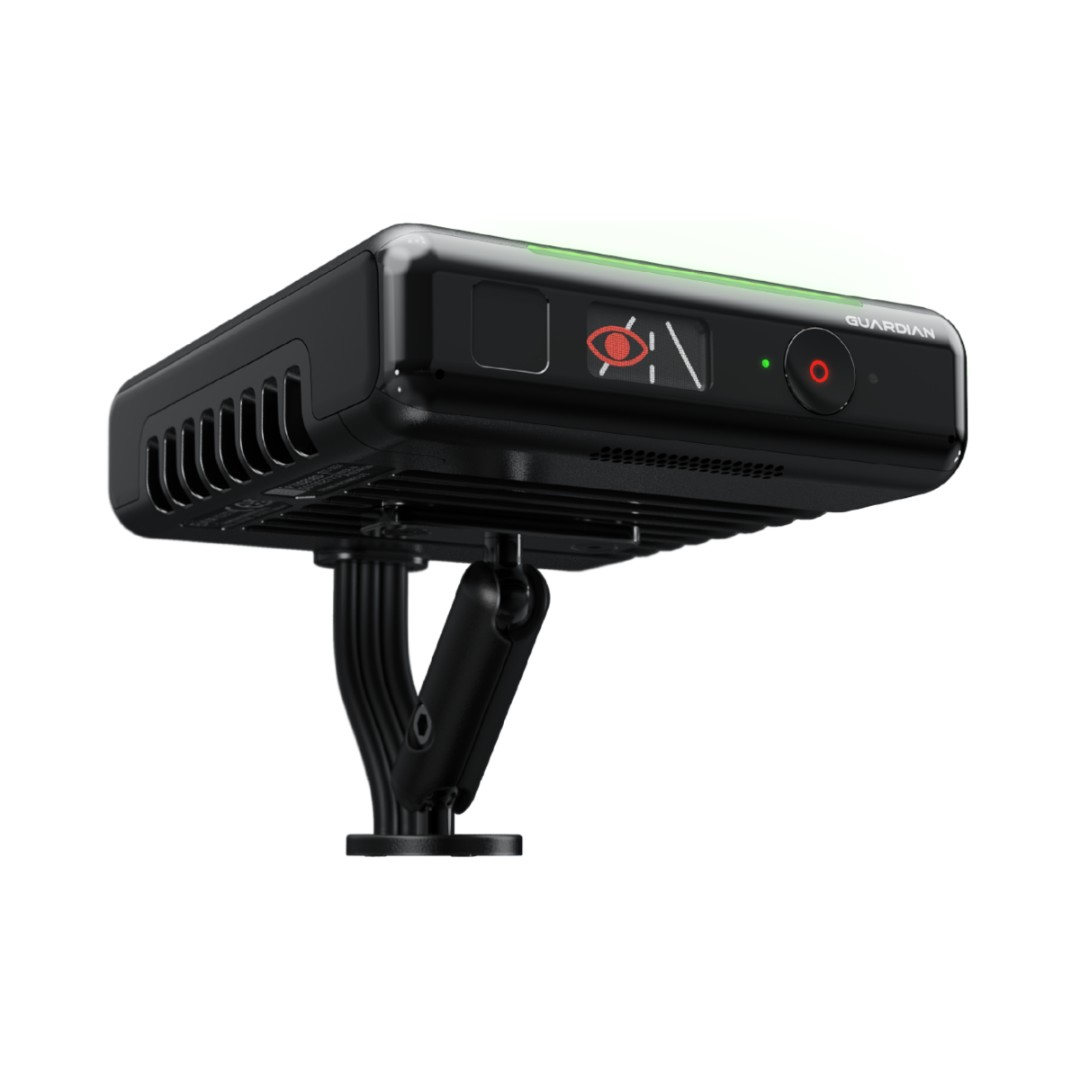
A next-generation, automotive-grade driver-state system: an in-cabin sensor continuously evaluates drowsiness and meticulously tracks the driver's eyes to detect both continuous and short off-road glances — the pattern typical of phone use. When risk is detected the system intervenes instantly with audio, visual and seat-vibration alerts, and every event is reviewed around the clock so confirmed fatigue reaches your team within minutes.
Scientifically graded drowsiness scoring intervenes before the microsleep — not after.
Tracks true eye movement, catching phone-use patterns head-position systems miss.
Audio, visual and seat-vibration alerts proven to reduce fatigue events by over 90%.
Trained analysts review every event and notify your team of confirmed fatigue in minutes.
In-cab analysis with event-based recording — monitoring driver state, not the driver.
Technology independently assessed against European DDAW & ADDW requirements.
Talk to our team about Advanced AI Fatigue Detection for your fleet — hardware, connectivity, installation and support from one supplier.

 English
 English (US)
 English (AU)
 English (NZ)
 English (SA)
 Français
 Français (CA)
 Italiano
 Deutsch
 Español
 Nederlands
 Português
 Polski
 العربية
 עברית
עברית Svenska
 Dansk
Dansk Suomi
Suomi Norsk
Norsk