GPS asset tracking uses rugged battery-powered or hardwired trackers to give live location, geofencing and theft alerts for trailers, plant and equipment that have no engine of their own. Fit a tracker once and every asset appears on the same map as your vehicles — with nationwide installation available across the UK.
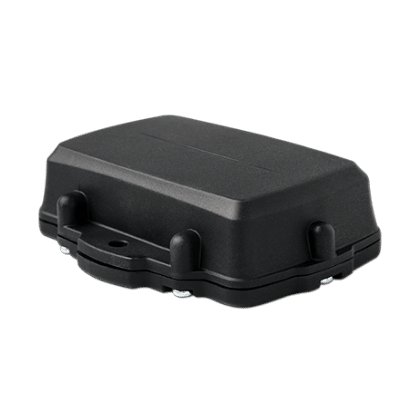
"GPS asset tracking" spans several device types and asset classes. Whichever you need, the goal is the same: turn plant, trailers and equipment that have no power supply of their own into visible, protected, always-current entries on one map.
Self-contained GPS trackers with multi-year batteries — often 5 to 10+ years — for assets with no wiring to tap into: trailers, skips, generators, containers and static plant. Fit-and-forget, with movement, geofence and tamper alerts built in.
Hardwired into an asset's own electrical system — typically excavators, telehandlers and other self-powered plant — for continuous reporting, run-hour data and engine diagnostics without ever thinking about battery life.
Ultra-rugged, IP67–IP69K trackers built for the abuse a trailer takes: pressure-washing, vibration and years outdoors. Ideal for haulage, curtainsiders, flatbeds and container trailers moving between sites and depots.
Covert, magnet-mount and hardwired options for diggers, dumpers, generators and site cabins — the highest-theft-risk assets on any construction site, tracked alongside utilisation and idle-time reporting.
Tools and small kit that are too light or awkward for a GPS tracker are usually better served by a Bluetooth asset tag read by gateways in vans and depots, or a consumer-style Find My asset tag for lower-value items where a phone-network location fix is enough.
The tracker reports GPS position over the mobile network — 4G LTE-M/NB-IoT with 2G fallback on most models — with Wi-Fi and Bluetooth positioning to fill in where satellites can't reach, such as inside containers or buildings.
Draw a virtual boundary around a yard, site or depot and the platform logs every entry and exit automatically — no manual check-in required, and a full history for every asset.
An instant alert fires the moment an asset moves outside agreed hours, leaves its geofence, or is tampered with — so a theft is flagged in minutes, not discovered weeks later at the next stock-take.
A dedicated recovery mode switches to high-frequency tracking on demand, and covert secondary trackers with crowdsourced positioning keep reporting even if a primary device is found and removed — giving police a live location to work with.
Most fleets run a mix of both — wired trackers on powered plant, battery trackers on everything else — all reporting into the same platform. Talk to our team and we'll recommend the right split for your asset register; see the full asset tracking guide for the complete device range.
Where fuel, chemicals, gas or solvents create an explosive atmosphere, a standard tracker cannot be fitted at all. Our ATEX / IECEx Zone 0 range covers tankers, IBCs, cylinders and process plant — satellite, cellular, solar and satellite-failover variants, all sealed to IP68 and IP69K with up to ten years of service life.
Tools, cases, cabinets and accessories rarely justify their own cellular tracker. Bluetooth tags cost a fraction as much and are located over a crowdsourced Bluetooth network — no gateway of your own required. Rugged, ultra-thin adhesive and credit-card formats, all waterproof with multi-year sealed cells.
Answer a few short questions and the wizard recommends the right battery-powered asset tracker for your fleet — with an instant battery-life estimate you can tune to your own deployment.
Plant and equipment theft costs UK construction firms heavily every year, and site-to-site moves make manual asset registers impossible to keep current. Tracking cuts theft losses and shows exactly what's on which site. See Construction & Plant.
Know where hired-out kit is between contracts, prove on-site time for accurate billing, and spot idle assets sitting in a yard instead of earning. See Rental & Hire.
Trailer and container tracking gives transport managers live visibility of assets moving between depots, customer sites and ports — cutting demurrage costs and recovering trailers left off-network. See Road Transport & Logistics.
This page covers the GPS asset tracking solution family. For the complete device range, pricing approach and a fuller FAQ, see the dedicated Asset Tracking guide.
Battery-powered trackers carry their own multi-year power source and can be fitted to anything in minutes, making them the standard choice for trailers, plant and other non-powered assets. Wired trackers tap into an asset's own electrical system for continuous reporting and engine data, and suit self-powered plant that's already at a fixed base.
Accuracy is typically within a few metres outdoors. Reporting frequency is configurable — from periodic heartbeats that maximise battery life to near-continuous updates once movement or a recovery mode is triggered.
Yes. Movement and tamper alerts flag a theft within minutes, a dedicated recovery mode increases reporting frequency, and covert secondary trackers with crowdsourced positioning can keep working even if the primary device is found.
No. Battery-powered trackers are designed specifically for assets with no power of their own, and are sealed to IP67–IP69K so they survive outdoor use, pressure-washing and years without maintenance.
Battery trackers are screwed, bolted or magnet-mounted — often in minutes, with no auto-electrician needed. Wired installs on powered plant take longer and are best scheduled with one of our nationwide installation engineers; get in touch and we'll advise on timescales for your fleet.
Talk to our team about battery or wired GPS asset tracking for your fleet — hardware, connectivity, installation and support from one supplier. Call 0800 020 9339 or send us your requirements.

 English
 English (US)
 English (AU)
 English (NZ)
 English (SA)
 Français
 Français (CA)
 Italiano
 Deutsch
 Español
 Nederlands
 Português
 Polski
 العربية
 עברית
עברית Svenska
 Dansk
Dansk Suomi
Suomi Norsk
Norsk