Bridges are struck around 1,666 times a year — roughly five a day — almost always by a driver who believed they would fit. Each strike risks lives, delays trains and can cost a fleet tens of thousands of pounds.
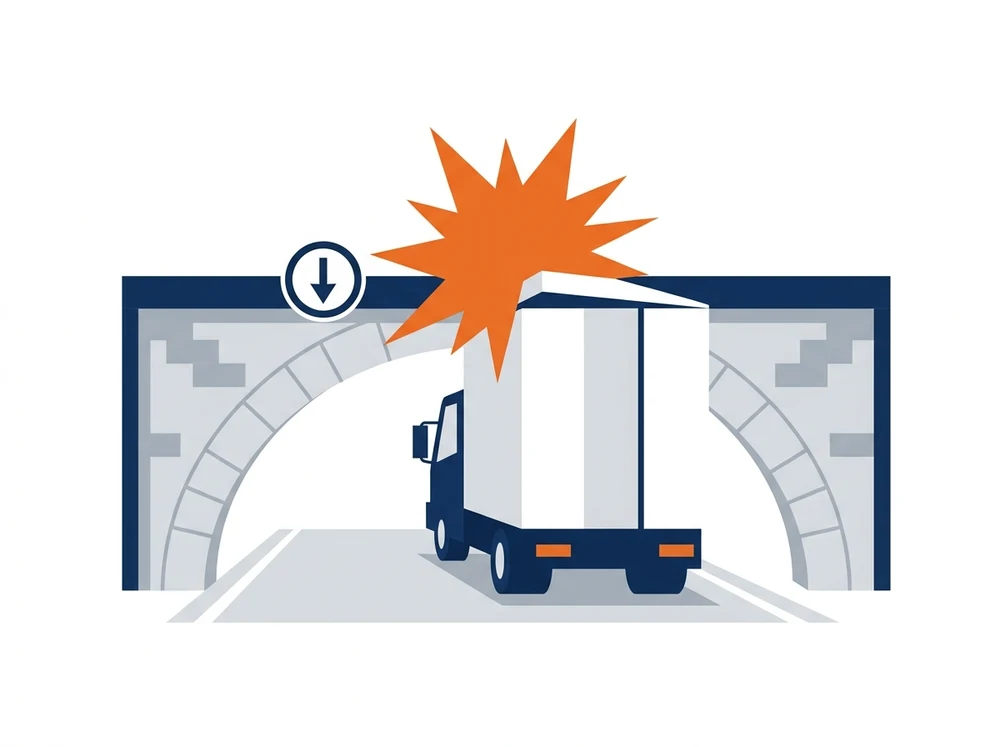
The UK averages five railway bridge strikes a day — over 1,666 a year — at a cost of around £23 million to the taxpayer.
43% of HGV drivers admit they do not know their exact vehicle height, and fail to account for low bridges when planning a route.
Drop-and-hook swaps mean a driver's height can change between trailers — paper checks and memory don't keep up.
A single strike can trigger Schedule 8 train-delay charges and licence risk, and Network Rail pursues hauliers for the full cost.
A Triple-Validation Engine fuses three sources to act before impact: a forward-facing AI camera reading bridge arches and gantry signs, 10 Hz GPS geofencing against a database of 2,000+ UK bridges, and RFID dynamic height sensing that tracks the live trailer height. Confirmed together, they fire a staged in-cab intervention with near-zero false positives — 96% detection accuracy.
Forward-facing camera actively reads bridge arches, gantry signs and roadside height indicators in real time.
High-precision positioning cross-references the vehicle's path against known height-restricted structures.
Automatically tracks the live trailer height — solving the drop-and-hook problem without driver input.
Monitoring escalates to amber pre-warning, then a high-decibel alarm when a collision path is confirmed.
Deep integration with a database of 2,000+ UK bridges, validated against GPS for accurate alerts.
Integrates with MDR / DVR multi-camera systems and the platform for event review and reporting.
A forward-facing detection camera, in-cab driver display and height-configuration keypad — deployed together or alongside MDR / DVR for recorded evidence.
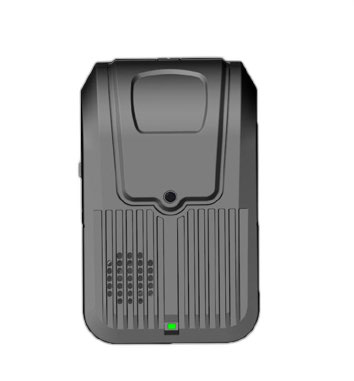
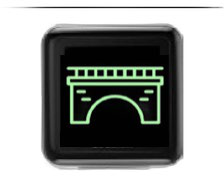
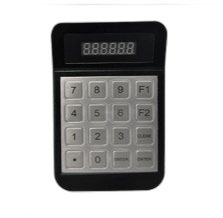
Talk to our team about Low Bridge Detection for your fleet — hardware, connectivity, installation and support from one supplier.

 English
 English (US)
 English (AU)
 English (NZ)
 English (SA)
 Français
 Français (CA)
 Italiano
 Deutsch
 Español
 Nederlands
 Português
 Polski
 العربية
 עברית
עברית Svenska
 Dansk
Dansk Suomi
Suomi Norsk
Norsk