
 English
 English (US)
 English (AU)
 English (NZ)
 English (SA)
 Français
 Français (CA)
 Italiano
 Deutsch
 Español
 Español (LatAm)
 Nederlands
 Português
 Português (BR)
 Polski
 العربية
 עברית
 Svenska
 Dansk
 Suomi
 Norsk
 Български
 Ελληνικά
 Lietuvių
 Română
 Čeština
 Magyar
 Türkçe
 日本語
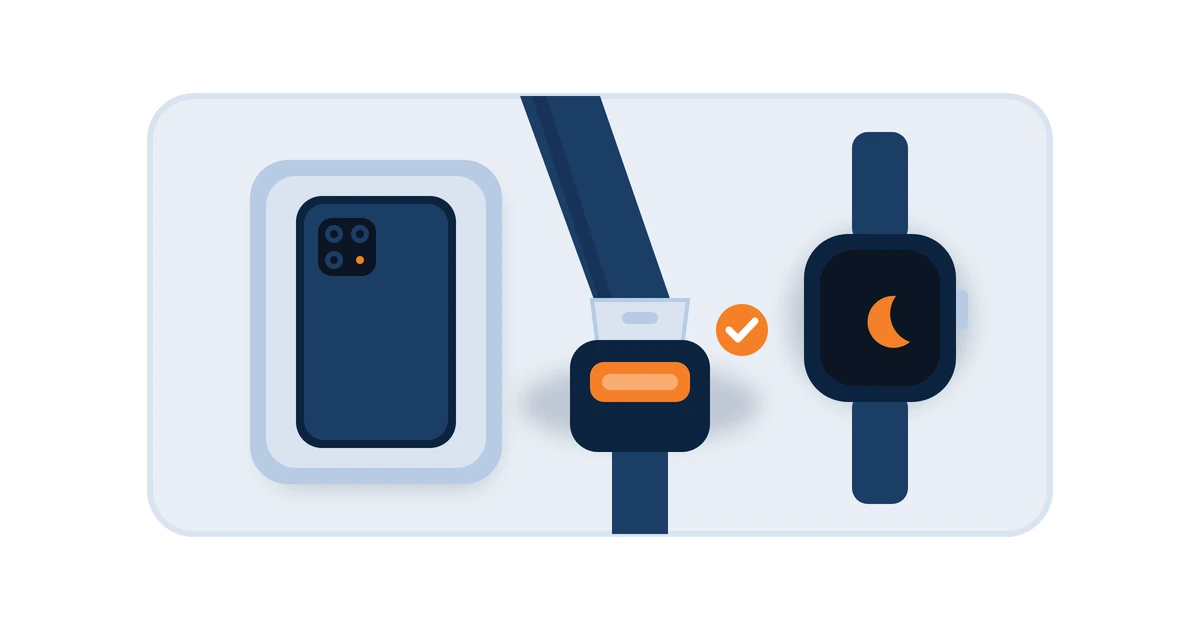
Road Safety Week runs from 15 to 21 November, and Brake’s theme this year is that those with the potential to do the most harm must take the greatest responsibility for people who are more vulnerable on the roads than them. For anyone who employs drivers, the most practical place to start is the cab: what the driver is holding, looking at and wearing.
This is general guidance, not legal or employment advice. Vision Telematics does not offer legal advice, and nothing here should be relied on as a substitute for it. You should take independent advice before changing employment policies or monitoring drivers.
What the West Midlands trial found
In March 2026, AI cameras were set up outside two fire stations, at Ladywood in Birmingham and Fallings Park in Wolverhampton, in a trial funded by the West Midlands Combined Authority with police and fire services. When the results were announced in October, the two sites had flagged 17,075 potential seatbelt offences and 1,920 potential mobile phone offences between them: 18,995 in two weeks.
Read the numbers carefully. They are potential offences, not convictions, and not a count of individual drivers. The trial was designed to measure the scale of the problem, and no enforcement action was taken. The partnership behind it is now evaluating whether the cameras could be used for police enforcement in future.
For fleets, the point is simple. A habit that has gone unseen for years, such as a quick look at a message in a queue or a seatbelt left off for a short hop, is exactly what this kind of camera is built to find. If roadside AI moves from trial to enforcement, the first time an operator hears about a driver’s phone habit may be when that driver’s licence is at risk.
What the national figures say
The Department for Transport’s final figures for 2025, published in July 2026, put numbers on the same behaviours across Great Britain:
- Use of a mobile device was recorded as a factor in 3.2% of fatal collisions, 32 in all.
- Not wearing a seatbelt was recorded in 133 fatal collisions, and around a quarter of car occupants killed whose seatbelt status was known were not wearing one.
- Distraction to the driver or rider from inside or outside the vehicle was the most commonly assigned distraction or impairment factor in fatal or serious collisions, at 12%, and 18% on motorways.
DfT notes that these factors come from what police officers record, so they should be read as recorded behaviours rather than a complete measure of their involvement in collisions.
Van drivers stand out. In DfT’s roadside survey of England in autumn 2023, 0.62% of van drivers were seen holding a phone while driving, against 0.20% of car drivers and 0.29% of lorry drivers, and higher phone use by van drivers was also seen in the 2021, 2017 and 2014 surveys. In the Crime Survey for England and Wales for the year ending March 2025, 4.3% of drivers said they had used a phone in their hand while driving in the previous 12 months.
What the law says, and who it applies to
GOV.UK states that it is illegal to hold and use a phone, sat nav, tablet or any device that can send or receive data while driving, and that this still applies when stopped at traffic lights, queuing in traffic, or using a device that is offline. The penalty is 6 penalty points and a £200 fine, and a court can ban the driver and impose a fine of up to £1,000, or £2,500 for a lorry or bus driver. Drivers who passed their test in the last two years lose their licence.
Hands-free use is allowed, provided the device is not held at any time. But GOV.UK also says drivers must stay in full control of the vehicle, and that the police can stop a driver they think is not in control because they are distracted, who can then be prosecuted.
The regulation behind the phone offence also says that no person shall cause or permit another person to drive while that person is using a hand-held mobile phone. Whether an employer’s instructions or practices amount to that depends on the facts, but it is a good reason to make sure nobody in the office expects a driver to answer while moving.
On seatbelts, GOV.UK says you must wear one if it is fitted in your seat, and that you can be fined up to £500 if you do not. There are a few exceptions, including for a driver of a goods vehicle on deliveries travelling no more than 50 metres between stops. In January 2026 the government consulted on making failure to wear a seatbelt an offence carrying 3 penalty points. That consultation closed on 11 May 2026 and, at the time of writing, DfT says it is analysing the feedback.
Distraction is wider than the phone
Most fleet policies were written for the phone. The cab now holds more than that: a touchscreen, a sat nav, a job app on a handheld terminal, and often a smartwatch.
The Highway Code warns that in-vehicle systems such as satellite navigation and multimedia can distract drivers, and says: “Do not be distracted by maps or screen-based information (such as navigation or vehicle management systems) while driving or riding.” It adds that using hands-free equipment is also likely to distract attention from the road.
The Health and Safety Executive lists personal digital assistants, notifications, apps and mobile phones among the distractions employers should reduce. It says employers should have a clear policy on mobile phones, provide adequate hands-free equipment if drivers need to communicate while driving, and make sure hands-free mode is used sparingly. For organisations that give out work through an app, as in gig-economy models, HSE says they should make sure the app does not create additional risk.
Wearables deserve a line of their own. The phone regulation treats a device as hand-held if it is, or must be, held at some point while being used. How that applies to a particular device is a legal question, but the duty to stay in full control applies whatever the device, so the simplest policy is that drivers do not interact with any device while the vehicle is moving.
Find it in your own data before a roadside camera does
Telematics data on its own cannot see a phone. It can show the pattern around it, such as harsh braking on a road with no junction or a sudden lane wobble, but it cannot say why.
Driver-facing AI cameras can. They flag sustained eyes-off-road time, whatever the cause, and many systems can also flag a phone held in view of the camera. That makes them a way to find the habit early, coach it out and keep the evidence that you did. How to decide whether driver-facing cameras are right for your operation, and how to configure them, is set out in the guide to driver-facing cameras.
Two controls make the difference between a safety programme and a grievance. HSE says management and coaching feedback are a critical part of any vehicle safety monitoring system, and warns against relying solely on in-vehicle feedback. And no automated flag should reach a driver’s record until a trained person has reviewed the clip. Monitoring drivers also brings data protection duties, covered in the guide to DPIAs for driver monitoring.
A distraction policy for 2026: what to add
| Policy area | What the policy should say | What you can show afterwards |
|---|---|---|
| Phones | No hand-held use while driving, including when stopped in traffic. Hands-free only when necessary, and kept short | Signed acknowledgement; hands-free kit issued |
| Calls from the office | Nobody expects a driver to answer while moving; messages wait until the driver is parked | Briefing record for office and planning staff |
| Job apps and handhelds | Jobs are reviewed and set up before moving off; no entries while driving | App settings; induction checklist |
| Touchscreens and sat nav | Routes are set before departure; screens are mounted so they do not block the view of the road | Vehicle set-up check |
| Wearables | Notifications silenced while driving; no interaction while the vehicle is moving | Policy wording; toolbox talk record |
| Seatbelts | Worn on every journey, however short; the delivery exception is narrow and set out in writing | Spot checks; camera events, where fitted |
| Monitoring | What is monitored, who reviews it and what happens next, with coaching first | Review log; coaching notes |
| Review | Policy re-issued and re-acknowledged each year | Dated version history |
The roadside cameras in the West Midlands found nearly 19,000 potential offences in two weeks at two sites. Run the same question against your own fleet: if a camera watched your vans for a fortnight, what would it find, and would you already know?
Sources: West Midlands Combined Authority — AI road safety camera trial results, announced 12 October 2026 (as reported by Fleet Point and TheBusinessDesk); Department for Transport — Reported road casualties Great Britain, final results: 2025, Risk behaviours and circumstances, and Road safety factors (30 July 2026); Department for Transport — Mobile phone use by drivers: England 2023 (30 May 2024); Department for Transport — Crime Survey for England and Wales: self-reported driver behaviour, year ending March 2025 (27 November 2025); GOV.UK — Using a phone, sat nav or other device when driving, and Seat belts: the law; The Road Vehicles (Construction and Use) Regulations 1986, regulation 110; Department for Transport — Proposed changes to penalties for motoring offences (consultation, 7 January to 11 May 2026); The Highway Code, rules 148 to 150; Health and Safety Executive — Make sure drivers and riders are safe, and Plan and manage journeys; Brake — Road Safety Week 2026. Read on 11 November 2026; the GOV.UK pages, the consultation and the trial figures checked again on 14 November 2026. General guidance, not legal advice.