
 English
 English (US)
 English (AU)
 English (NZ)
 English (SA)
 Français
 Français (CA)
 Italiano
 Deutsch
 Español
 Español (LatAm)
 Nederlands
 Português
 Português (BR)
 Polski
 العربية
 עברית
 Svenska
 Dansk
 Suomi
 Norsk
 Български
 Ελληνικά
 Lietuvių
 Română
 Čeština
 Magyar
 Türkçe
 日本語
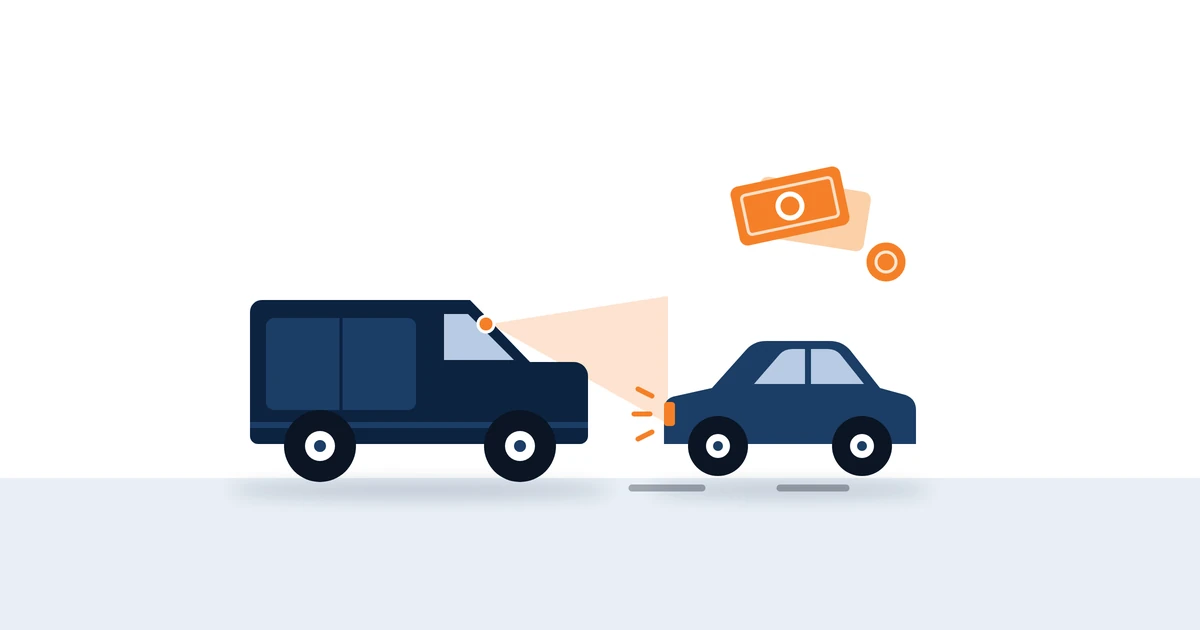
Your driver is following a car through a busy junction. The car in front accelerates, then brakes violently for no reason — brake lights disconnected, so there's no warning. Bang. Within minutes the other driver is suspiciously calm, insurance details already written out, and every occupant is reporting whiplash.
Within two weeks the claim arrives: vehicle damage, soft-tissue injuries for every occupant, a rental car already on the clock. Your driver is certain it was deliberate. Without evidence, that certainty is worth nothing.
It's called "crash for cash", and it is organized crime, not bad luck. Motor insurance is where insurers detect the most fraud: in 2024 they detected 51,700 fraudulent motor insurance claims worth £576 million — more than half of all the fraudulent claims they uncovered, on the Association of British Insurers' figures. Crash for cash is one part of that total, and those are only the claims that were caught.
A newer variant uses mopeds and motorcycles: the rider drives into oncoming traffic, often with an accomplice on hand to accuse the victim. In March 2025 the Insurance Fraud Bureau (IFB) linked it to a £75 million fraud scheme that had by then seen 4,700 innocent road users deliberately targeted across London and the Home Counties. The same scammers had also taken out more than 1,100 fraudulent motor insurance policies using details stolen from their victims.
Why commercial vehicles are prime targets
Fraudsters don't pick victims randomly. Fleet vehicles are attractive because they're visibly insured, carry commercial policies with higher limits, and their drivers are "on the clock" — under pressure, likely to accept liability quietly and move on. A branded van or truck is, to a fraud gang, a well-funded claim waiting to happen.
The selection is rational from the fraudster's side. A rear-end collision defaults to the following vehicle, and a large vehicle in a dispute with a car starts from the weaker position. The professional driver's account has often been the only record, and it carries less weight than an independent one. And fleets under commercial pressure often settle disputed claims simply to close them — which the gangs know.
For the operator, the damage goes far beyond one claim: months of disputed liability, inflated injury and credit-hire claims, driver stress and disciplinary ambiguity, rising premiums and a claims history that follows the business for years.
The common patterns
Staged collisions tend to follow a handful of scripts:
- The induced stop. A vehicle pulls in front and brakes hard without cause, often with its brake lights disabled, at a junction, roundabout exit or highway ramp where sudden braking looks plausible. The IFB says it remains one of the most common ploys.
- The waved-in trap. Your driver is signaled to pull out of a side street or across a lane, and the vehicle that did the signaling drives into them — then denies ever signaling. In May 2026 the IFB reported a spike in side-street setups of this kind, and in deliberate wrong-lane moves on busy roundabouts.
- The phantom passenger. The collision may be genuine and minor. The claim arrives with more occupants than were in the vehicle, each with an injury.
- The exaggerated claim. A real, low-speed contact is presented as a significant impact, with damage and injury inflated far beyond what occurred.
- The staged scene. Pre-existing damage is attributed to your vehicle, or a collision is arranged between two colluding parties with your vehicle presented as the cause.
Not every script plays out in front of the vehicle: a side-street setup arrives from the side, which matters when you choose cameras. See why forward-facing cameras miss most fleet incidents.
Without video, it's your driver's word against theirs
Induced collisions are designed to look like your driver's fault — a rear-end collision is presumed to be the following vehicle's liability. Police and insurers can rarely disprove a well-rehearsed script from multiple "witnesses" in the fraudster's car. That's why the IFB's own advice to anyone caught up in a suspected crash for cash lists dashcam footage among the evidence to gather: footage is often the only evidence that reveals the disconnected brake lights, the deliberate swerve, the impossible injury claim.
What the footage shows is specific: brake lights coming on with nothing ahead, a vehicle changing lanes and immediately decelerating, a wave-through that is later denied. These are visible, unambiguous and very difficult to argue with. Pairing that footage with the vehicle's own data is what video telematics does — see what video telematics is.
Connected fleet dashcams go further than consumer devices:
- Automatic incident capture and upload. Footage of the seconds before, during and after impact is transmitted to the cloud immediately — it can't be lost, deleted or "not working that day", and it reaches your insurer at First Notification of Loss, when it has the most power to kill a fraudulent claim.
- Telematics corroboration. Speed, braking and G-force data from the vehicle corroborates the video, demonstrating your driver's safe following distance and the other party's engineered stop. The combination is what turns a video clip into evidence.
- Occupant visibility. A camera view that shows how many people were in the other vehicle answers the phantom passenger directly — and each extra claimant is another injury claim.
- Impact severity data. Accelerometer readings show the actual force of a collision, which frequently contradicts the injuries claimed after a low-speed contact.
- Driver-facing context. AI driver cameras prove your driver was alert and undistracted — dismantling the "he was on his phone" script before it starts.
- Deterrence. Gangs surveil for easy targets. Visible camera systems move your fleet from "ideal victim" to "not worth the risk".
The claims impact is dramatic: insurers can repudiate fraudulent claims outright when clear video exists, and legitimate claims settle faster and cheaper because liability is established in minutes rather than months.
Speed matters as much as the footage itself. A fraudulent claim depends on there being no counter-narrative; supplying one early, before the claim is fully constructed, frequently ends the matter before it begins. The full sequence is set out in how video evidence changes an insurance claim.
The deterrent is the benefit nobody counts: it never appears in a business case, because it consists of incidents that did not happen. It is real nonetheless.
What to do if your driver is targeted
Brief your drivers: stay calm, never admit liability, photograph everything (vehicles, occupants, positions), note how many people were in the other vehicle, gather independent witnesses, and report suspicions to your insurer and the IFB's confidential CheatLine (0800 422 0421). Then let the footage do the talking.
Drivers are the first line, and a few points are worth adding to that brief:
- Report anything that felt deliberate. Do it immediately, even if there was no contact: near misses form patterns, and patterns are what investigators need.
- Hand over only what the law requires. The IFB warns that a request to photograph an insurance certificate or driver's license is a red flag — moped scammers have used victims' details to take out policies in their names.
- Refuse an on-the-spot resolution. Do not be pressured into settling at the roadside, in cash or otherwise.
- Know the settings. Junctions, roundabouts, highway ramps and side streets where another driver waves you out are where these collisions are staged.
- Flag the footage before it is overwritten. On a continuous-loop system, footage has a finite life. A driver who reports on Friday what happened on Monday may be reporting on footage that no longer exists.
That last point is worth reinforcing regularly. It is an easy way for good evidence to be lost — not through system failure, but through a delay of a few days that nobody thought mattered.
How Vision Telematics can help
Vision Telematics supplies connected AI dashcams and multi-camera systems with automatic event upload, integrated vehicle telematics data and driver-facing options — giving you court-ready evidence for every mile your fleet drives, all managed through our Find My platform. We'll help you specify the right camera configuration per vehicle type, from single vans to multi-camera HGVs.
Sources: Association of British Insurers — detected insurance fraud figures for 2024, published 17 November 2025 (51,700 fraudulent motor claims worth £576 million detected in 2024, 53% of all detected fraudulent claims). Insurance Fraud Bureau — moped scam warning, published 18 March 2025 (a £75 million fraud scheme; 4,700 road users targeted; more than 1,100 fraudulent motor policies taken out with victims' stolen details); motor insurance fraud hotspots release, published 27 May 2026 (common and emerging crash for cash tactics); crash for cash guidance and CheatLine.