
 English
 English (US)
 English (AU)
 English (NZ)
 English (SA)
 Français
 Français (CA)
 Italiano
 Deutsch
 Español
 Nederlands
 Português
 Polski
 العربية
 עברית
עברית Svenska
 Dansk
Dansk Suomi
Suomi Norsk
Norsk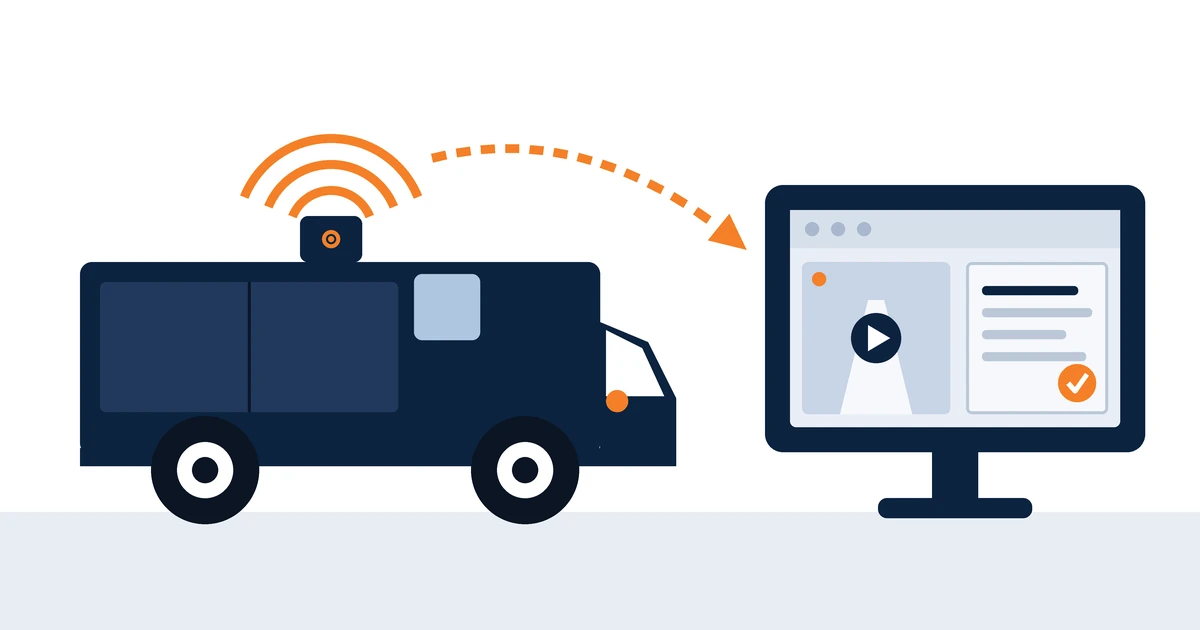
Two identical collisions. Same junction, same fault pattern, same damage. One fleet has connected video; the other does not. Twelve months later the two claims have cost dramatically different amounts, and only part of the difference is about who was to blame.
Understanding why means looking at what actually happens to a claim over time.
Without evidence: the default runs against you
A third party alleges your vehicle caused a collision. Your driver disagrees. There is no independent record.
What follows is predictable. Liability is disputed, which means it takes months rather than weeks. Legal costs accumulate on both sides. The third party’s vehicle goes on credit hire, at daily rates that build steadily while the dispute continues. An injury claim appears — sometimes several, from occupants nobody recalls seeing. Eventually, with no way to prove otherwise, the matter settles on a compromise basis.
Two structural factors make this worse for commercial operators. First, in a dispute between a large goods vehicle and a car, the assumption tends to run against the larger vehicle. Second, the delay itself is expensive — the longer a claim stays open, the more it costs, almost regardless of the eventual liability split.
The Financial Conduct Authority’s review of motor claims costs, published in July 2025, found that the cost of hire vehicles has risen significantly, and that referral fees from credit hire firms and claims management companies were associated with slower claims processing and increasing costs.
Motor is also where insurers find the most dishonesty. In 2024 they detected 51,700 fraudulent motor insurance claims worth £576 million — more than half of all the fraudulent claims they uncovered, on the Association of British Insurers’ figures — and those are only the ones that were caught.
Staged collisions are the extreme version of this, covered in its own article on how staged collisions target commercial fleets.
With evidence: the sequence collapses
The impact triggers automatic detection. The relevant footage uploads within minutes with speed, braking, steering and position data attached. The fleet contact is notified while the vehicle is still at the scene. The insurer is notified the same day with the evidence already attached.
Liability is usually resolved in a single review. Credit hire never starts accumulating, or stops almost immediately. Exaggerated injury claims tend not to proceed once it is clear an objective record exists. The file closes in weeks rather than months.
If connected cameras are new to you, start with the article on what video telematics is.
Four distinct effects, worth separating
Exoneration. Claims you would have lost, or settled at 50/50, that you now win outright. The fastest and often largest single line in the business case, and it can be realised on one incident.
Severity. Even where you are at fault, the claim costs less. Early evidenced notification shortens the window in which third-party costs, credit hire and inflated claims accumulate. This effect is consistently underestimated because it does not feel like a win — you still paid — but the difference between a claim notified in two hours and one notified in three weeks is substantial.
Frequency. Coaching based on real footage changes behaviour more effectively than coaching based on a spreadsheet, because it is specific and undeniable. It is slower to appear, and entirely dependent on whether the coaching actually happens.
Terms at renewal. Underwriters price what they can see. A fleet that can produce incident data, notification times, coaching records and a two-year trend is a materially different proposition from one that cannot — and increasingly, the absence of data is read as an absence of control rather than as neutral.
How those four effects become a case for investment is set out in the guide to building a telematics business case.
Why the first 48 hours matter more than anything else
Claims cost is heavily front-loaded in the decisions made immediately after the incident: whether the third party’s insurer captures the claim first, whether credit hire starts, whether an injury claim is presented before your position is established, and whether the scene evidence exists at all.
This is why automated first notification of loss is one of the highest-value integrations available. Not because notification is difficult, but because it usually happens too late — the driver mentions it at the end of the shift, the paperwork goes in on Thursday, and by then the other side has had four days to build its file and yours contains a handwritten note.
Making footage stand up
Evidence is only useful if its integrity holds. Four things matter.
Originality. The system retains the original file. Footage downloaded, edited into a clip and emailed around is weaker on every count.
Time and location accuracy. Timestamps derived from satellite time rather than a device clock nobody has checked since installation.
Access audit. A record of who viewed, downloaded and shared the footage, and when.
Completeness. Being able to show that nothing was selectively withheld. A system that produces the whole relevant sequence is more credible than one that produces only the convenient portion.
The uncomfortable question
What if the footage shows we were at fault?
Then it shows that, and you settle a claim you would have settled anyway — usually faster and for less, because the delay costs disappear.
The claims that footage costs you are the ones you were going to lose. The claims it saves are the ones you were paying without ever knowing you should not have been. Across a portfolio, that arithmetic has one direction.
Sources: Association of British Insurers — detected insurance fraud figures for 2024, published 17 November 2025 (51,700 fraudulent motor claims worth £576 million detected in 2024, 53% of all detected fraudulent claims). Financial Conduct Authority — Motor insurance claims analysis, multi-firm review, first published 22 July 2025, analysing claims costs from 2019 to 2023 (the cost of hire vehicles has risen significantly; referral fees from credit hire firms and claims management companies were associated with slower claims processing and increasing costs).