
 English
 English (US)
 English (AU)
 English (NZ)
 English (SA)
 Français
 Français (CA)
 Italiano
 Deutsch
 Español
 Español (LatAm)
 Nederlands
 Português
 Português (BR)
 Polski
 العربية
 עברית
 Svenska
 Dansk
 Suomi
 Norsk
 Български
 Ελληνικά
 Lietuvių
 Română
 Čeština
 Magyar
 Türkçe
 日本語
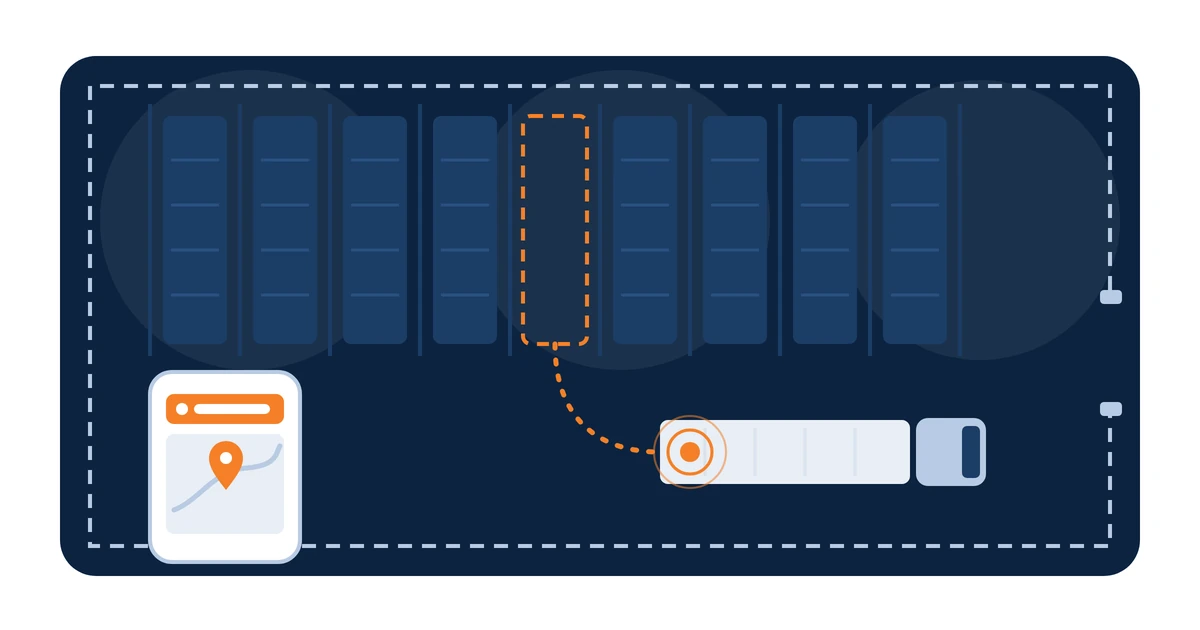
The movement of goods that fills the shops in December also fills the pull-offs, rest areas and yards where those goods spend the night. Police and the industry are saying the same thing this autumn, and saying it early.
In October, the Yorkshire and Humber Regional Organised Crime Unit launched a campaign with the National Vehicle Crime Intelligence Service (NaVCIS), stepping up overt and covert activity at HGV parking sites in the evenings. Its launch statement explained why: “In the busy weeks and months leading up to Christmas, the movement of a range of consumer goods increases both in frequency and value, making it a time of heightened risk.” On 6 November the Road Haulage Association (RHA) published its own peak-season warning to operators, saying that “we are also entering a peak for freight crime”.
The scale of the problem
The detective superintendent leading the regional unit’s campaign put the national picture in two numbers: an average of nine offenses a day, and a total cost of £65 million last year. The same statement lists the wider impact: trauma to drivers who confront thieves, damaged vehicles, replacement transport, missed deliveries and insurance costs.
The true figure is hard to pin down, and that is part of the problem. NaVCIS points out that freight crime does not have its own Home Office crime category, so many offenses are logged simply as “theft from a motor vehicle”. Industry data shows how much goes unvalued. The Transported Asset Protection Association (TAPA) recorded 4,043 freight thefts in the UK in the 18 months to 30 June 2026, but only 189 of them, fewer than 5%, had a confirmed loss value. Those 189 alone came to more than £34.2 million.
Where it happens
Most of it happens while the vehicle is parked. The regional unit describes gangs “slashing curtain sides or breaking open back doors while drivers are on rest breaks”. NaVCIS data shows that 20% of recorded freight crime offenses in 2025 happened at highway rest areas, with an estimated loss of £2.5 million, against 6% at truck stops. Offenses at rest areas rose from 69 in the first quarter of 2026 to 91 in the second.
Parking is the constraint underneath all of this. NaVCIS says that without secure parking, many drivers are forced to stop overnight in pull-offs, industrial parks and other unsuitable places. The RHA says the country needs 11,000 more safe and secure truck parking spaces. The Department for Transport (DfT) told Parliament in March that a new national survey of truck parking is under way.
Not every theft happens on the road. On 31 August, two curtain-sided trailers holding about 880 barrels of stout, worth around £115,000, were taken from a depot in Runcorn. Cheshire Police later found both trailers some 30 miles away in Skelmersdale. The load had not been found when the force renewed its appeal a week later. Finding the trailer and finding the load are two different problems.
Layer one: the basics come first
No tracker makes up for a trailer left unlocked in a dark pull-off. The RHA’s peak-season advice and the DfT’s Road Transport Security Standards set out the foundations, and both are worth reading in full. In short:
- Park high-value loads in secure locations and use trailer pin locks (RHA).
- Make sure yard CCTV is fit for purpose, check gates and fencing regularly, and test that your detection measures actually work (RHA).
- Vet all staff, including third-party guarding (RHA).
- Train drivers to use secure parking and avoid pull-offs, and keep load details off social media (RHA).
- Keep stored fuel and AdBlue away from vulnerable areas, with a robust record of its use (RHA).
- Activate alarms or immobilizers whenever a vehicle is unattended, including when refueling and delivering (DfT).
- Report theft of or from a vehicle to the police and to your organization immediately (DfT).
The RHA also reminds operators to check that high-value loads carry the right uplift on their goods-in-transit insurance.
Layer two: tracking that shortens the gap
Locks and parking reduce the chance of a theft. Tracking changes what happens next: how soon someone knows, and whether the police get a location or only a description. The DfT standards suggest companies “should consider installing devices on vehicles that can alert when doors or cargo are opened”. In practice, match the device and the alert to the risk.
| Risk | What to fit | Alert worth setting |
|---|---|---|
| Detached trailer in a yard or drop lot | Concealed battery-powered trailer tracker | Movement outside working hours, or leaving the depot boundary |
| Trailer coupled to the wrong unit | Tracker with a power or connection input | Coupling or uncoupling that nobody scheduled |
| Forced or opened rear doors | Door sensor on the trailer | Doors opened away from a planned delivery point |
| High-value load taken off the trailer | Covert GPS tracker hidden inside the load | The load moving when the trailer has not |
| Chilled and frozen loads | Temperature monitoring with door sensors | Door opening or temperature change en route |
| Unplanned overnight stops | Planned routes to secure parking, with geofences around approved sites | Arrival at and departure from the approved site |
The load tracker deserves its own note. The Runcorn case shows why the trailer alone is not enough. Use a covert GPS tracker for this job, not a consumer-style crowd-finding tag. Crowd-network tags can trigger anti-stalking alerts on nearby phones, which tells whoever is carrying the load that it is being tracked. The difference between the two is set out on the page about Find My asset tags.
On the vehicle side, fuel is worth watching: NaVCIS reported that fuel was the most frequently stolen commodity in its freight crime report for April to June 2025. A tracker that reads the vehicle’s own fuel data can show the level falling while the unit is parked.
Plan routes around secure parking before the driver sets off; it is easier than finding a space at the end of a long shift. Truck-legal routing and realistic drive times are covered on our routing and scheduling page.
How to choose, mount and power a tracker for a trailer is covered in more depth in the guide to tracking non-powered assets. The devices themselves are described on the page about GPS asset tracking.
Layer three: the plan for the 2am alert
An alert at 02:14 is only useful if somebody reads it at 02:15. Before the peak weeks start, write down the answers to five questions:
- Who receives out-of-hours alerts? A named person and a deputy, not a shared inbox.
- Who is authorized to act? Including who can call the police and who can contact the driver.
- What goes to the police? The live location, the location trail, the trailer and unit registrations, any fleet ID numbers on the trailer, and a description of the load.
- Who else is told? NaVCIS asks for freight crime and suspicious activity to be reported to both the police and NaVCIS.
- Has anyone tested it? Trigger a test alert at night and time how long the response takes.
Keep the alert thresholds sensible, too. A system that sends a hundred movement alerts a night trains people to ignore the one that matters.
What tracking will and will not do
Tracking does not stop a determined, organized gang. Some look for trackers, which is why concealment and a second hidden device matter on high-value trailers. What tracking changes is the timeline. An alert as the trailer moves replaces a discovery when the yard opens, and a location trail replaces a description.
Freight crime is not only a Christmas problem, as the regional unit itself says. But the run-up to Christmas is when the most valuable loads are on the road. If your trailers, loads and parked units are covered before 1 December, you are covered for the period police are warning about.
Sources: NaVCIS — Campaign launched to tackle heavy goods vehicle crime in the run-up to Christmas (15 October 2026), Safer Parking Freight and NaVCIS join forces to tackle freight crime (22 October 2026), Securing Beverage Freight: Tackling Alcohol Theft in the UK (28 May 2026); Road Haulage Association — Peak season, peak crime: protecting your drivers, vehicles and loads (6 November 2026), 11,000 spaces short: Why lack of secure parking is a gift to thieves (6 April 2026); Transported Asset Protection Association figures as reported by Motor Transport (4 August 2026); Cheshire Constabulary — Further appeal for information following theft from a depot in Runcorn (7 September 2026); Department for Transport — How to meet the standards: an RTSS toolkit for commercial vehicle operators (2025) and written answer UIN 121849 (25 March 2026). Every source checked again on 21 November 2026.